Phytotherapy course
Professional training in herbal medicine, with no medical education required — pharmacists, massage therapists, beauticians and nutritionists. Three months by distance learning plus one hands-on day in the salon. The diploma of professional retraining is entered in the Federal Education Register, and the Europass supplement is issued in English.



What makes our training genuinely effective
We teach real herbal techniques, not lecture notes
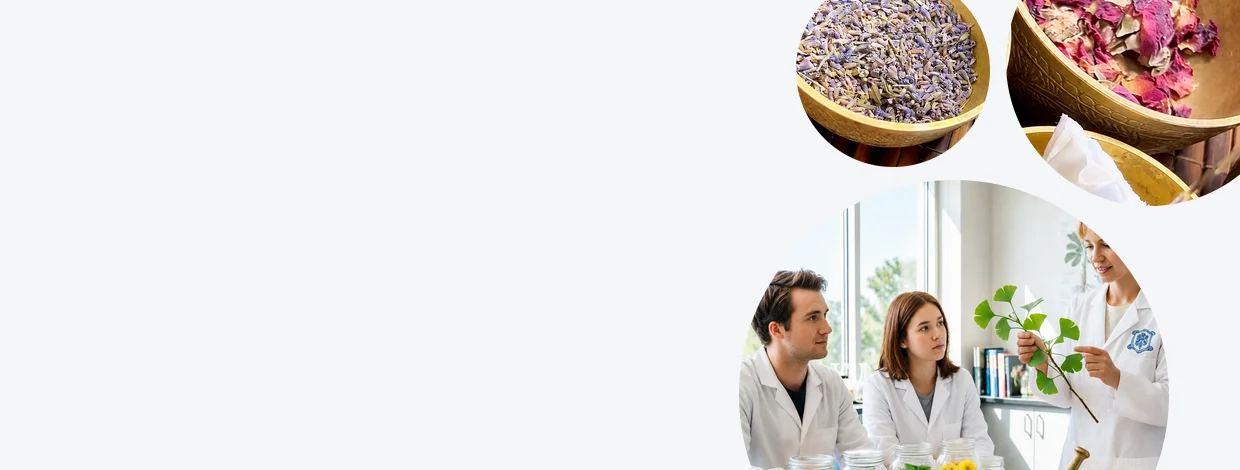
Every module ends in practice: you blend your own herbal mix, brew an infusion, sew and steam a compress bag and work through the massage. The on-site day takes place in the salon, where you treat a client under a tutor’s guidance.

For pharmacists — a wider arsenal
Most of our students come from pharmacies. Phytotherapy adds herbal remedies alongside synthetic ones: you will be able to recommend blends, herbal preparations and recovery methods with confidence — not only tablets — and become a far more valuable specialist behind the counter.

For therapists, beauticians and anyone seeking a new niche
A herbal bar, compress bags, herbal steam rituals, signature blends and poultices — high-margin, low-cost treatments that slot straight into an existing practice or salon.
Our standard — graduating
top-class specialists
520 academic hours of theory and practice
The full professional retraining programme in phytotherapy: from the legal foundations and biologically active substances to making herbal preparations, compress bags and herbal steam programmes.
Distance learning plus one day on site
You cover the theory online at your own pace, without leaving your job, and practise with your hands on site — one working day in the salon with real clients.
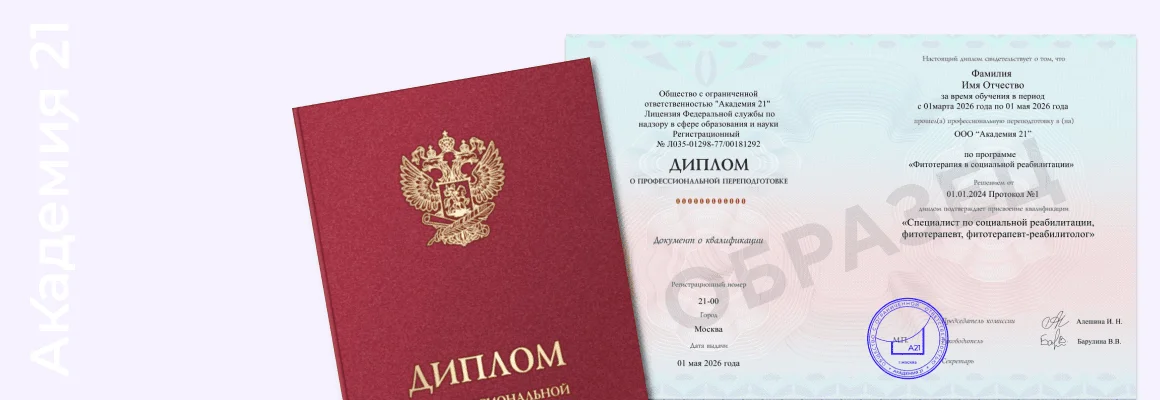
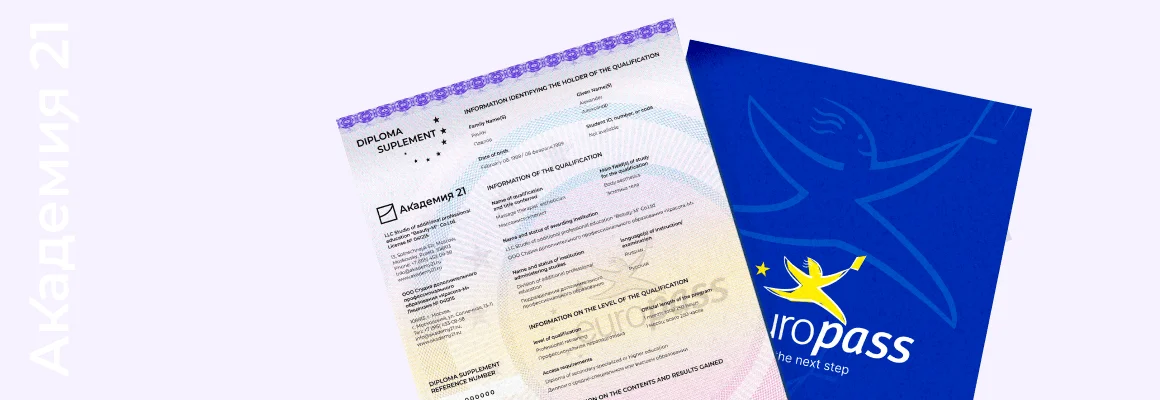
Documents on completion:
The diploma of professional retraining confirms your right to practise as a herbal therapist. It can be notarised, and the Europass supplement states your qualification in a language employers abroad understand.
On completion you receive a diploma of professional retraining or a certificate — your choice. The phytotherapy diploma is entered in the Federal Education Register, and the Europass supplement is issued in English and recognised across the European Union.
Become a pro in the field of
phytotherapy — master herbal treatment, signature blends and compress-bag massage, and earn your qualification in three months
A profession that is always in demand
Demand for natural recovery methods grows every year. Herbal therapists are needed in pharmacies, spas, sanatoriums, massage rooms and beauty studios — and can run a private practice with no clinic behind them.
 Diploma in the Federal Education Register
 Europass supplement
 No medical education required
 Hands-on practice with a client
 Ready-made treatment protocols and recipes
New treatments and better consultations
For a pharmacist — herbal remedies and recovery protocols alongside synthetic medicines. For a therapist or beautician — compress-bag massage, poultices, herbal steaming and herbal bath rituals. All of it can be launched right after the course and recouped within the first season.
Constant development
Phytotherapy combines well with massage, cosmetology, reflexology and nutrition: every new method widens your range of treatments and raises the average bill.
Programme
Phytotherapy course, 520 academic hours
Legal foundations of healthcare
History, current state and prospects of phytotherapy
Where a herbal therapist’s work begins: what a specialist is allowed to do, how to document services and which papers to rely on. We trace phytotherapy from folk tradition to modern natural medicine.
General rules and principles of phytotherapy and phytoprophylaxis
Dosages, course length, herb compatibility, contraindications and safety rules. You learn to build a prevention programme rather than a one-off treatment — which is exactly what keeps a client coming back.
Medicinal plants: general characteristics and classification
Biologically active substances in medicinal and edible plants
We work with raw material you can actually source: what goes into a blend and in what order, which active substances do what, and how not to lose them during harvesting, drying and storage.
The role of phytotherapy in preventing and correcting disorders
Medicinal plants and phytotherapy for various conditions
Core principles of herbal treatment
Ready-made protocols for the most common requests: stress and insomnia, digestion, immunity, swelling, recovery after physical load. Each block comes with indications, contraindications and course length. We also cover how herbs interact with pharmacy medicines — the question pharmacists are asked most often behind the counter.
Using medicinal plants according to national schools and herbal traditions
Adaptogens and antioxidants. Algae and mushrooms
Chinese, Tibetan, European and Slavic traditions — what works in each and how to combine them in a single protocol. Adaptogens, antioxidants, algae and medicinal mushrooms are covered separately.
Combining phytotherapy with other natural medicine methods
Manufacturing herbal preparations, indications and contraindications
How to fold phytotherapy into massage, cosmetology, reflexology and nutrition. The technology of herbal preparations: from raw material to finished form, shelf life and storage conditions.
Preparing infusions and teas
Composing poultice recipes, herbal steaming
The practical part: you compose signature blends, prepare infusions and herbal teas, write poultice recipes and work through herbal steaming. You finish with a herbal-bar and treatment price list ready to launch.
Making herbal compress bags. Face and body massage with compress bags
Phytotherapy for the steam room and the bath
Bamboo cups in phytotherapy
The most hands-on module of the course: you sew and steam compress bags, work through face and body massage, build steam-room and bath programmes and work with bamboo cups. This block is what the on-site salon day covers.
See what it looks like in practice
Short clips from the course: how a herbal compress bag is blended and steamed, and how the treatment itself is done. This is exactly what you practise on the on-site day.